Costs proved daunting
While the Cardinal’s engineering advances, engine, transaxle, and sheet metal tooling were to be imported to keep costs down, at $1,306, the Cardinal was estimated wholesale for $8 more than the Volkswagen Beetle, $64 less than the Renault Dauphine, and $272 less than the Ford Falcon Tudor. With plans to produce 150,000 units annually, Ford expected an annual profit of $23 million, a 13.4 percent return.
And it was needed. European imported car sales volume had hit 110,000 units, which was greater than the company predicted for 1959. What was more concerning for Ford, though, was that a Beetle wholesaled for $465 less than the Ford Fairlane and $280 less than the Falcon. That was large enough for Volkswagen to grab more market share. And the Fords all cost more to own. A Ford Fairlane cost $1,434 to drive 10,000 miles annually, while a Volkswagen Beetle required $812. By comparison, a Falcon ran $1,247, while a Cardinal was expected to cost $1,072.
Nevertheless, Ford believed the Cardinal would be the first real competition that VW faced in the American market, a segment estimated to now be some 700,000 units strong.
The car’s takeoff was grounded
In November 1960, McNamara promoted Lee Iacocca to general manager of the Ford Division. The Cardinal was fait accompli as the year wound down, and McNamara joined President-elect Kennedy’s administration as secretary of defense. Iacocca then replaced him as president of Ford.
Under Iacocca, the Cardinal underwent changes that most likely were ordered by Iacocca to make it more sellable. Its wheelbase grew 2 inches (51 mm) while its length expanded 7 inches (178 mm), which increased its weight, cost, and proposed wholesale price, now $1,414, or $100 more than the Beetle.
Then in March 1962, word leaked of Ford’s new small car.
Ford
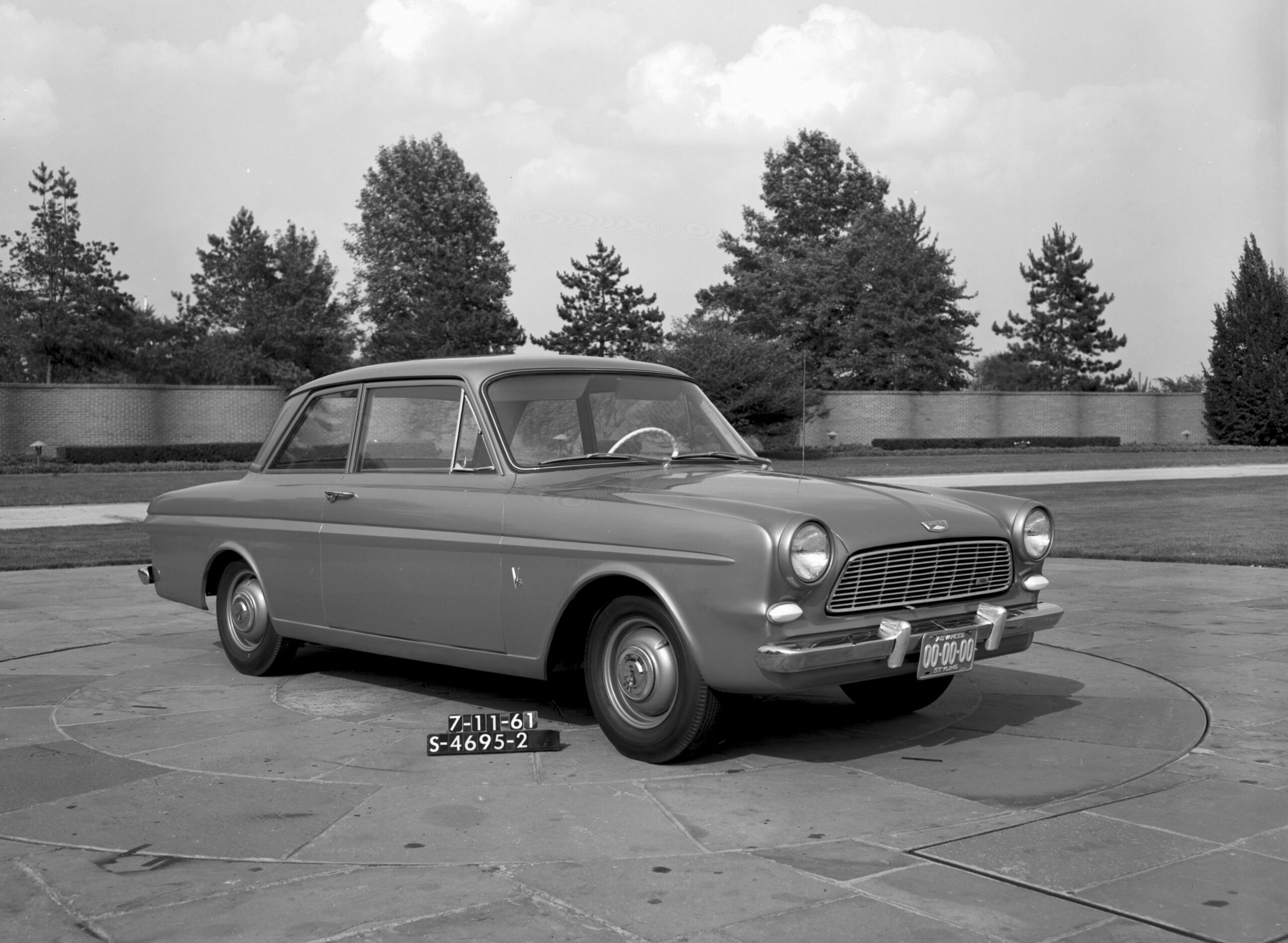
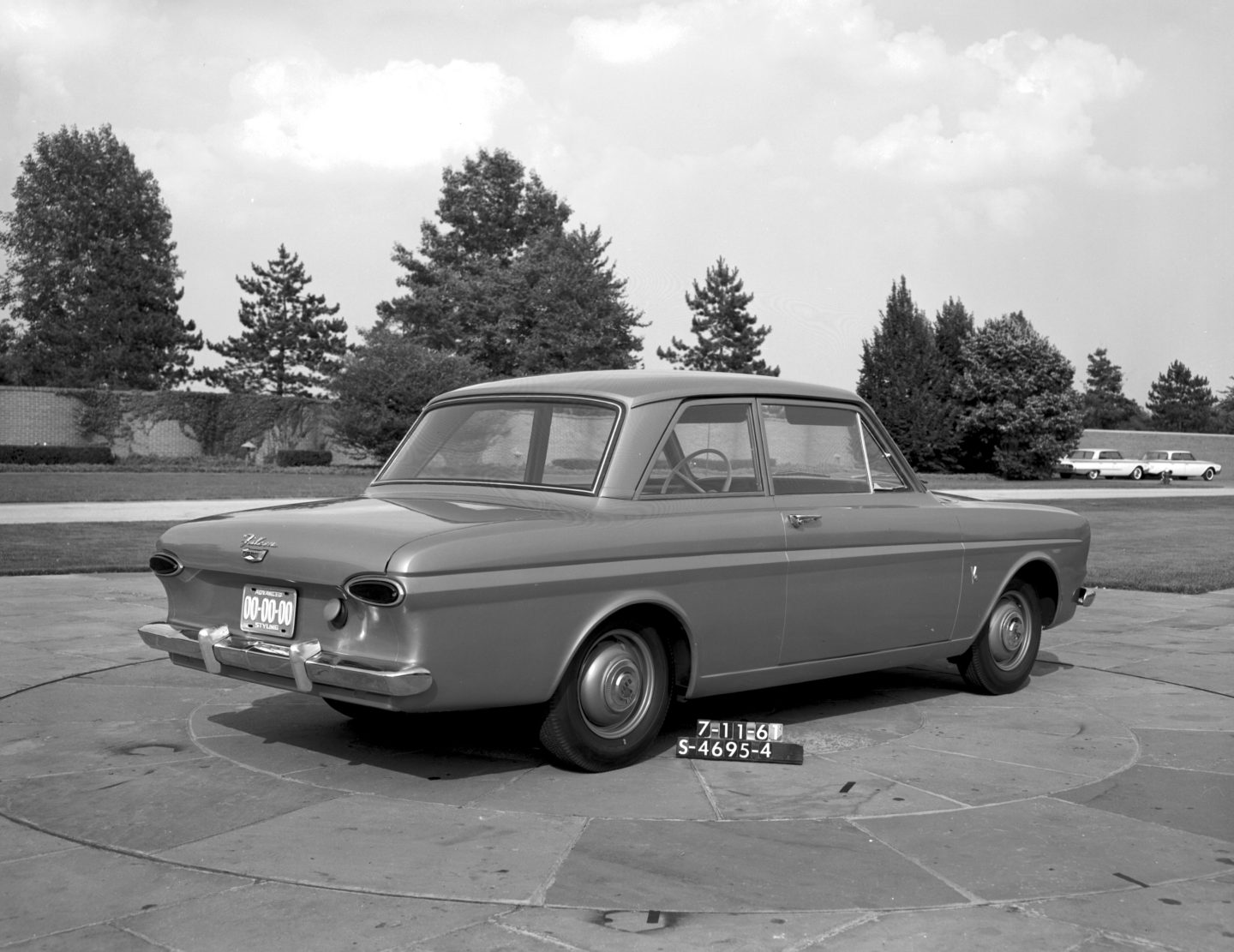
By 1961, the design had grown after Lee Iacocca decided the original Cardinal was too small for American tastes.
Ford
Ford
Ford would continue tweaking the design for another year before pulling the plug in 1962.
Ford
By 1961, the design had grown after Lee Iacocca decided the original Cardinal was too small for American tastes.
Ford
Ford would continue tweaking the design for another year before pulling the plug in 1962.
Ford
“Hottest news was Ford’s decision to introduce the US’s first ‘compact compact,’ a 99-in. wheelbase car called the Cardinal,” Time Magazine wrote. “Designed to capture a chunk of the market now held by the Rambler American and such utility imports as the Volkswagen, the Cardinal will be produced, starting in July, at the same Louisville plant that made the ill-fated Edsel. To cut labor costs, Ford will have some Cardinal parts—including the engine, transmission, and differential—machined in Germany and shipped to Louisville for assembly. Ford’s German and British subsidiaries will manufacture local variants of the Cardinal.”