WorldAnimalFoundation.org is reader-supported. When you buy through links on our site, we may earn an affiliate commission. Learn More
Boerboel or Cane Corso? That’s the big question for anyone who wants a strong, confident, and loyal guard dog. At first glance, these two look pretty similar—massive heads, muscular builds, and a presence that turns heads.
But what really sets them apart is how they behave, how they bond, and how they protect. One might be calmer, while the other reacts faster. One may demand more control, the other more affection. And if you’re not ready for their strength—both mental and physical—life can get overwhelming fast.
This guide will walk you through the stuff that matters: how they act with kids, how much space they need, what kind of training keeps them balanced, and whether they thrive in your kind of home.
By the end, you’ll know exactly which breed can protect your home and become part of your family.
Boerboel vs. Cane Corso
Appearance and Basic Information
Size and Overall Build
When it comes to size, both dogs are impressively large, but Boerboels are generally more massive. A fully grown Boerboel can weigh between 150 and 200 pounds, often standing 24–27 inches tall.
The Cane Corso is slightly lighter, typically ranging from 90–120 pounds with a height of 23.5–27.5 inches. Both breeds have commanding statures, but Boerboels tend to be bulkier and more muscular in structure.
Musculature and Proportions
The Boerboel carries more athletic muscle mass, especially through the chest and shoulders, giving it a powerful, grounded look, as highlighted by Boerboel Australia.
Cane Corsos, while still muscular, lean more toward streamlined agility than sheer bulk. Their body is slightly longer than it is tall, while Boerboels often appear more square and compact in frame. Both dogs display incredible power and endurance in their build.
Head, Eyes, and Facial Structure
The Boerboel has a broader, blockier head with a deep muzzle and wide-set eyes that give it a calm yet alert expression.
The Cane Corso’s skull is slightly more elongated, and the muzzle is less deep, contributing to a more sculpted look, as mentioned in Dogs Australia.
Both breeds have medium to large, almond-shaped eyes and thick, muscular necks that flow into a well-developed chest.
Coat Type and Texture
Both dogs have a short coat that lies close to the body, making grooming relatively low-maintenance. Cane Corsos tend to have a slightly glossier coat, while Boerboels may appear denser due to their thicker skin.
The physical appearance of each breed reflects centuries of selective breeding for different functional characteristics—Boerboels for guarding South African homesteads and Cane Corsos for Italian estate protection and hunting support.
Temperament and Behavior
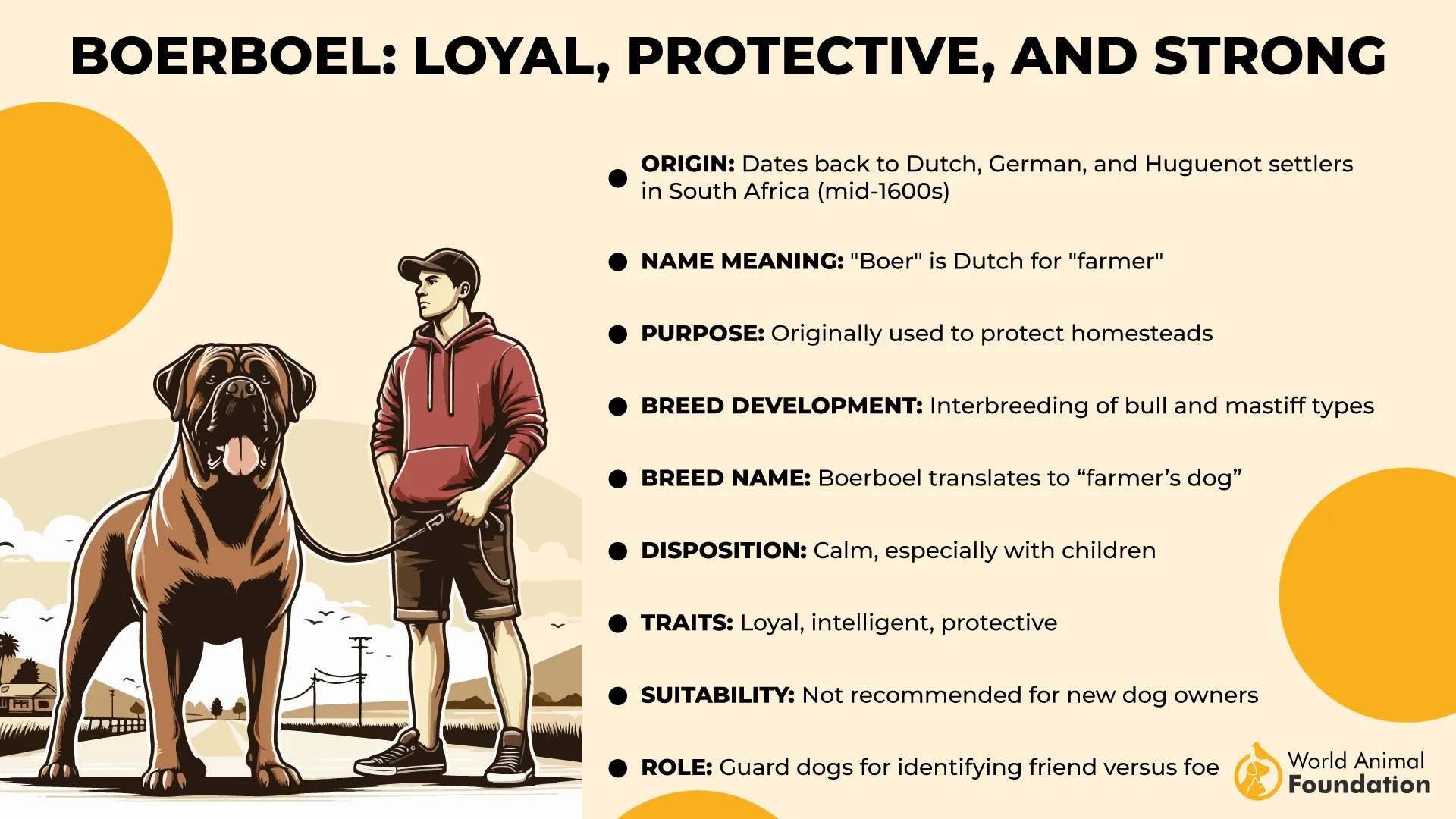
Boerboel: Protective and People-Bonded
Boerboels are deeply loyal and protective, often forming a strong, instinctive bond with their family. Their confidence doesn’t translate into recklessness—they’re composed, calm, and extremely intuitive. With the right leadership, they become excellent watchdogs, alert yet stable in their reactions to unfamiliar strangers.
Natural Guardians with a Balanced Mindset
Boerboels aren’t inherently aggressive, but they take their job as a working dog seriously and don’t back down when they sense a threat. They need purpose and structure, or they can become territorial and overly dominant. With early socialization, they learn to balance assertiveness with restraint.
Cane Corso: Serious and Task-Focused
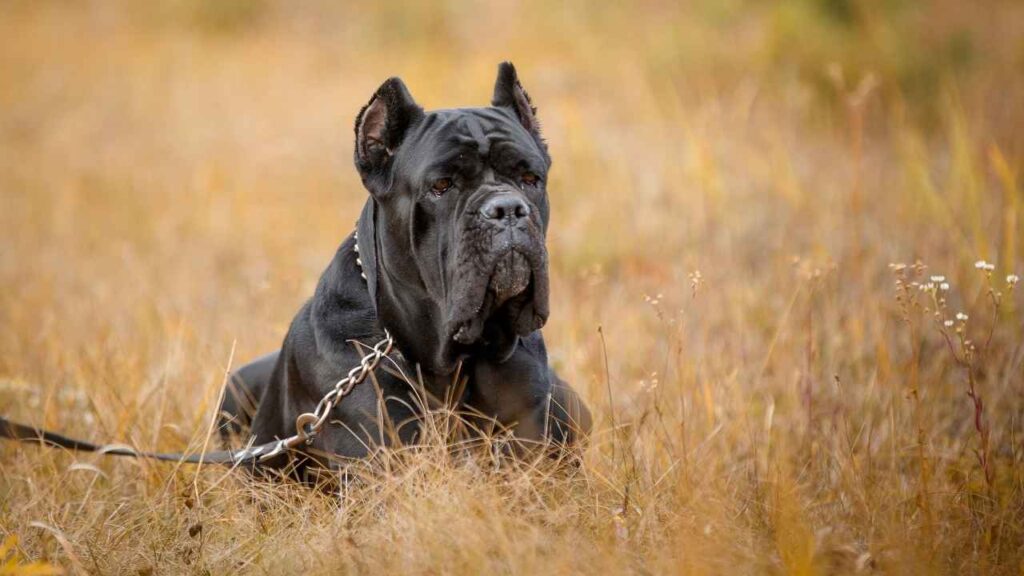
The Cane Corso has a more intense disposition—driven, focused, and highly responsive to its handler. Bred as a versatile working dog, it thrives on direction and control.
Corsi often display a reserved, no-nonsense demeanor, particularly in new environments or around unfamiliar animals and strangers.
Behavior with Households and Other Companions
While both breeds can coexist with other dogs and pets, Cane Corsos are more likely to develop dominant tendencies without strict boundaries.
Boerboels generally show more tolerance, especially if raised from a puppy in a multi-pet home. Neither breed is ideal for homes with a cat unless early socialization is consistent and controlled.
Trainability and Intelligence
Intelligence and Learning Style
Both Boerboels and Cane Corsos are incredibly intelligent, but how they process commands and respond to training can differ.
Boerboels are often more independent in their thinking, which means they can problem-solve, but may also test boundaries, as per PetMD. Cane Corsos, on the other hand, tend to be more eager to please and focused during structured sessions, making them slightly more responsive to verbal cues and hand signals, as stated in Pawlicy Advisor.
Response to Training Methods
Neither breed responds well to harsh or inconsistent training styles. Boerboels can shut down or become stubborn if they sense tension, while Cane Corsos may grow reserved or suspicious.
Using positive reinforcement—treats, praise, or play—works best for both, but especially with the Corso, where trust plays a crucial role in shaping behavior. Boerboels often require a bit more repetition before fully committing to a command.
Impulse Control and Focus
While both dogs can learn advanced commands, Boerboels often need a firmer hand when it comes to impulse control. Their natural guarding instinct means they assess every situation carefully before responding.

Cane Corsos tend to show better focus in distraction-heavy environments. When compared side by side, one of the main differences lies in how they balance protectiveness with obedience.
Health Considerations
Joint Health
Hip and elbow dysplasia is a shared concern between the Boerboel and Cane Corso, especially due to their large size. Boerboels are more likely to suffer from joint-related issues because of their bulkier frame, while Cane Corsos are also at risk, particularly as they age. Both breeds require careful management of their joints to ensure mobility is maintained throughout their lives.
Eye and Skin Conditions
Cane Corsos are more prone to eye conditions like entropion and cherry eye, which may require surgical correction if left untreated, as per PetMD. Boerboels, on the other hand, are more susceptible to skin sensitivities, particularly around the folds and underbelly, where moisture can accumulate, leading to potential infections.
Bloat and Heart Health
Bloat (gastric torsion) is a life-threatening condition that both breeds face, particularly after large meals or strenuous physical activity. Additionally, Cane Corsos are at higher risk for heart conditions such as cardiomyopathy. Regular check-ups and managing their feeding schedules are essential for preventing these issues.
Preventive Care
Regular vet visits are crucial for early detection of health issues, especially joint problems like elbow dysplasia. Both Boerboels and Cane Corsos benefit from joint supplements, dental care, and a controlled diet. Experienced dog owners will also find it helpful to keep an eye on their dogs for subtle signs of discomfort that may indicate underlying health concerns.
Life Expectancy
When it comes to longevity, Boerboels generally live between 9 to 11 years, while Cane Corsos average around 9 to 12 years. The difference in lifespan is minimal, but lifestyle, genetics, and health care play the biggest role in extending those years.
Exercise Needs
Cane Corso’s Daily Demands
The Cane Corso needs at least 90 minutes of structured physical activity daily, combining long walks, mental tasks, and advanced obedience work. They’re not satisfied with casual backyard roaming — focused stimulation is essential to keep them balanced and non-destructive.
Boerboel’s Activity Style
The Boerboel has strong energy levels but prefers shorter, high-intensity bursts. Around 60–75 minutes of purposeful exercise each day — including games, protection drills, or agility work — keeps them fit and mentally steady without overtaxing their joints.

Tolerance for Downtime
While neither breed is laid-back, Boerboels are more tolerant of rest periods between activity sessions. Cane Corsos tend to become visibly restless and may resort to pacing or chewing if their exercise needs aren’t met consistently.
Conclusion
Choosing between the Boerboel and Cane Corso ultimately depends on your lifestyle and experience. Both breeds demand consistent leadership, but Boerboels, often called South African Mastiffs, thrive with more independence, while Cane Corsos need focused, task-based engagement. Their loyalty runs deep, making them ideal for personal protection, especially in rural or estate settings.
Boerboels are commonly seen as excellent farm dogs, offering steadfast protection to property and family alike. Cane Corsos tend to be more reactive, especially around other animals, but with proper training, both breeds integrate well into a house setting.
These dogs boast one of the strongest bite forces, so control, trust, and respect are vital. For experienced owners, either breed can become a healthy, affectionate, and playful addition to the family. Just know that with their high energy levels, structure is a must. Without it, they can feel lost, unsure of their place in the human world.