WorldAnimalFoundation.org is reader-supported. When you buy through links on our site, we may earn an affiliate commission. Learn More
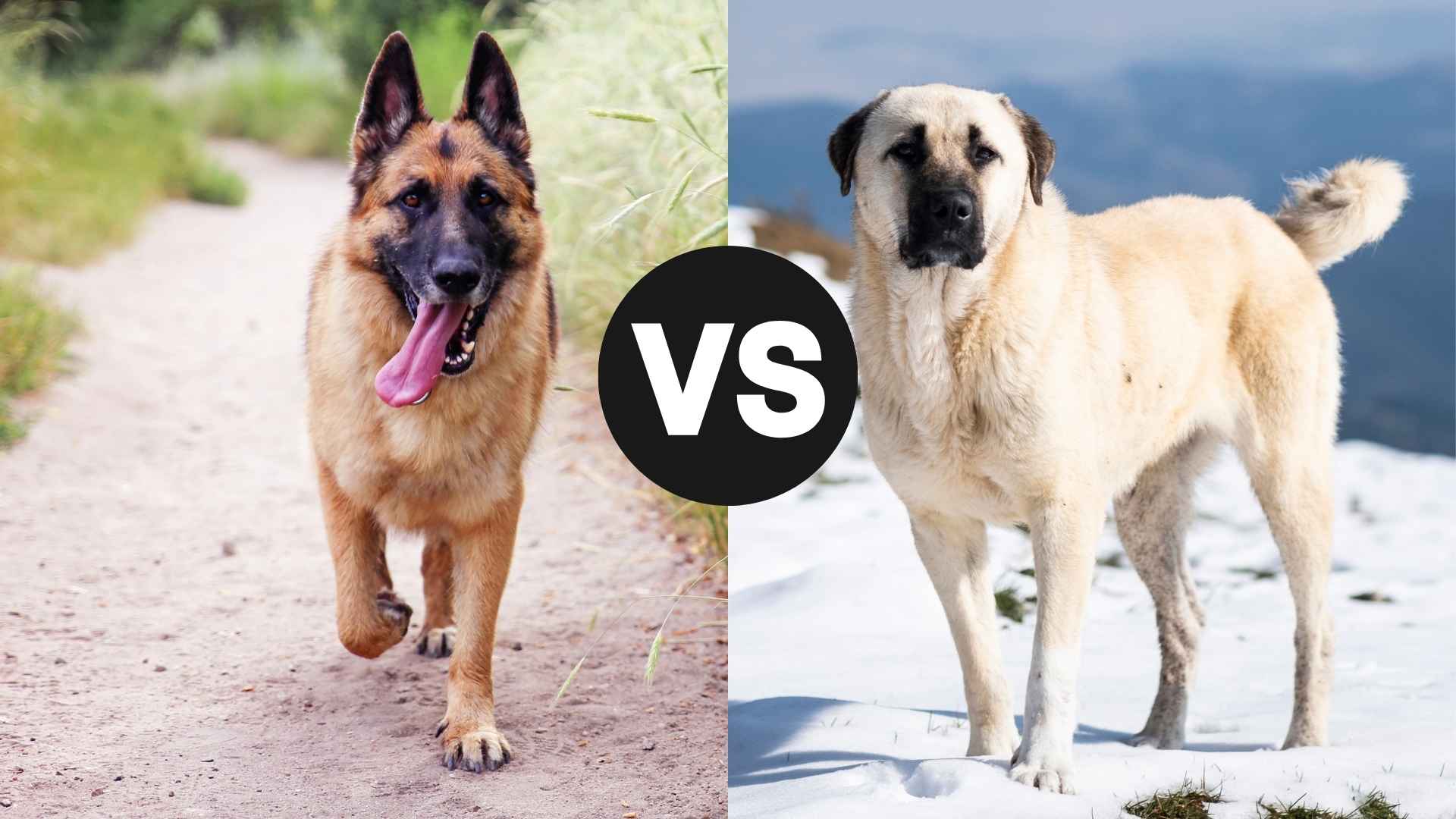
German Shepherds are the canine Einsteins of the dog world—smart, trainable, and always eager to please. Anatolian Shepherds? They’re more like the self-reliant bodyguards who don’t take orders but get the job done anyway.
If you want a dog that can ace obedience school and serve in the military, the German Shepherd is your guy. But if you need a four-legged fortress to guard your livestock from wolves, an Anatolian Shepherd is your best bet.
One thrives on companionship and training; the other is an independent powerhouse that prefers working alone. Sounds like a classic battle between brains and brawn, right?
Fun fact: Anatolian Shepherds have been protecting livestock for over 6,000 years! Meanwhile, German Shepherds have a résumé that includes police work, search-and-rescue, and even Hollywood fame.
German Shepherd vs. Anatolian Shepherd
|
Feature |
German Shepherd |
Anatolian Shepherd |
|---|---|---|
|
Size |
Large |
Extra Large |
|
Height |
22-26 inches (55-66 cm) |
27-32 inches (69-81 cm) |
|
Weight |
50-90 lbs (22-40 kg) |
80-150 lbs (36-68 kg) |
|
Bite Force |
~238 PSI |
~700 PSI |
|
Maintenance Cost |
Moderate ($1000-$2000/year) |
High ($1500-$3000/year) |
|
Breed Cost |
$500-$3000 |
$1000-$5000 |
|
Lifespan |
9-13 years |
11-15 years |
|
Breed Group |
Herding |
Working |
|
Temperament |
Loyal, Intelligent, Protective |
Independent, Protective, Territorial |
|
Trainability |
Highly trainable, eager to please |
Stubborn requires an experienced owner |
|
Health Concerns |
Hip Dysplasia, Degenerative Myelopathy |
Hip Dysplasia, Bloat, Hypothyroidism |
Size and Weight Comparison
When comparing the German Shepherd and Anatolian Shepherd, size plays a major role in their differences. German Shepherds are considered large dogs, standing between 22-26 inches tall and weighing around 50-90 pounds. They have a lean, athletic frame designed for agility, speed, and endurance.
In contrast, the Anatolian Shepherd dog is a true giant, towering at 27-32 inches and weighing a hefty 80-150 pounds. These dogs are built for power, with a thick bone structure and a muscular body designed to protect livestock from predators. If size is your main concern, the Anatolian dominates in both height and mass.
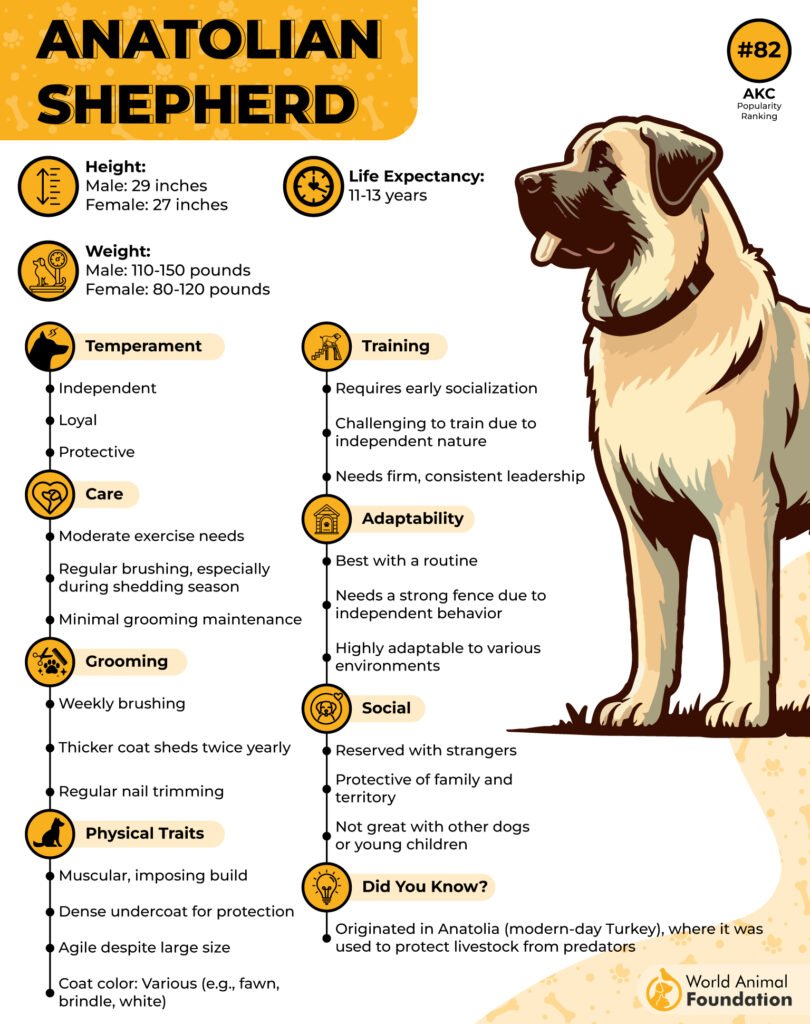
Despite their bulk, Anatolian Shepherds tend to be surprisingly agile for their size. Their long legs and sturdy build allow them to cover large territories, often roaming for miles while watching over their flock. Meanwhile, German Shepherd dogs excel in agility, making them ideal for police work, search-and-rescue, and active family life.
While both breeds are strong and resilient, their physical attributes suit different lifestyles. A German Shepherd is perfect for families who want a highly active and trainable companion. An Anatolian, however, thrives in rural areas where they can freely guard their territory without restrictions like a leash or small yard.
Another key factor is maintenance. A German Shepherd will shed heavily year-round but requires moderate care. The Anatolian Shepherd has a thick coat that protects against harsh weather, requiring regular grooming to manage loose dog hair.
Ultimately, choosing between these dog breeds comes down to lifestyle. If you want a versatile, highly trainable pet, go for the German Shepherd. If you need a self-reliant, powerful guardian, the Anatolian Shepherd is the clear winner.
Personality and Temperament Comparison
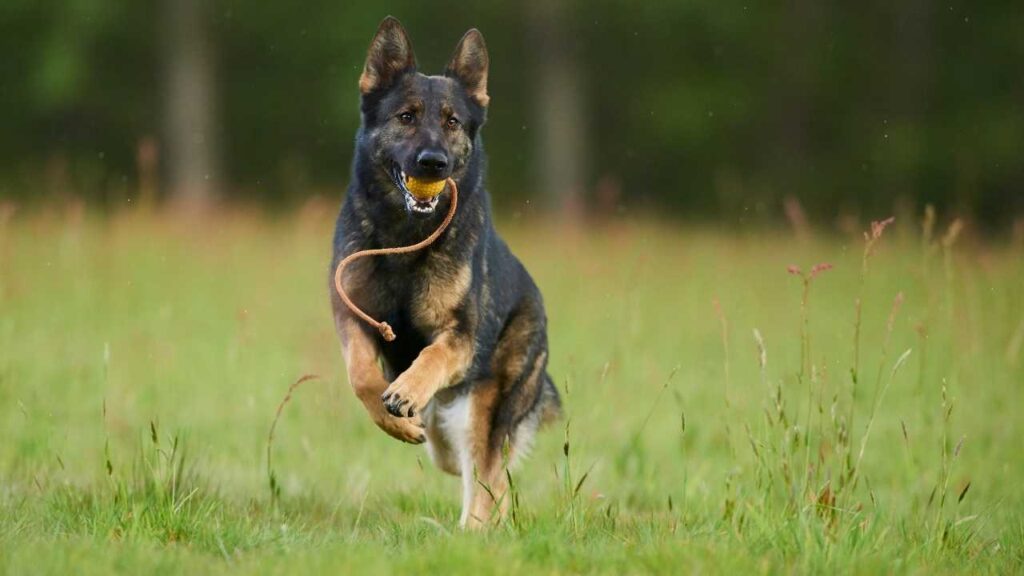
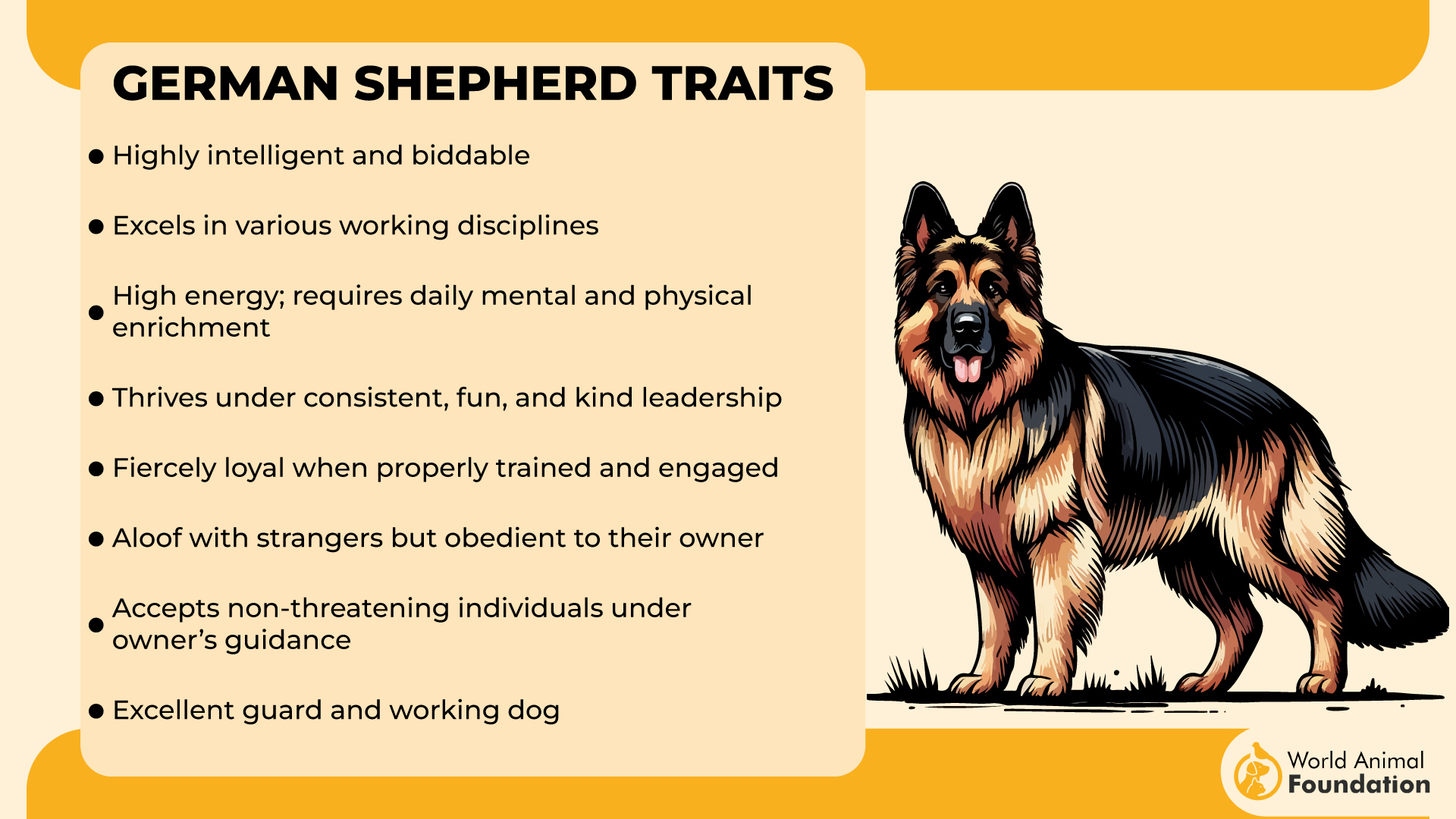
When it comes to personality and temperament, the German Shepherd vs Anatolian Shepherd matchup is a battle between the obedient scholar and the stubborn lone wolf. German Shepherd dogs are extremely intelligent, eager to learn, and deeply loyal to their owners. They thrive on training, human interaction, and structured activities.
On the other hand, the Anatolian Shepherd dog was bred to make decisions on its own. These dogs don’t wait for orders—they assess potential threats and act accordingly. Unlike the German Shepherd, which thrives on teamwork, the Anatolian Shepherd prefers to call the shots.
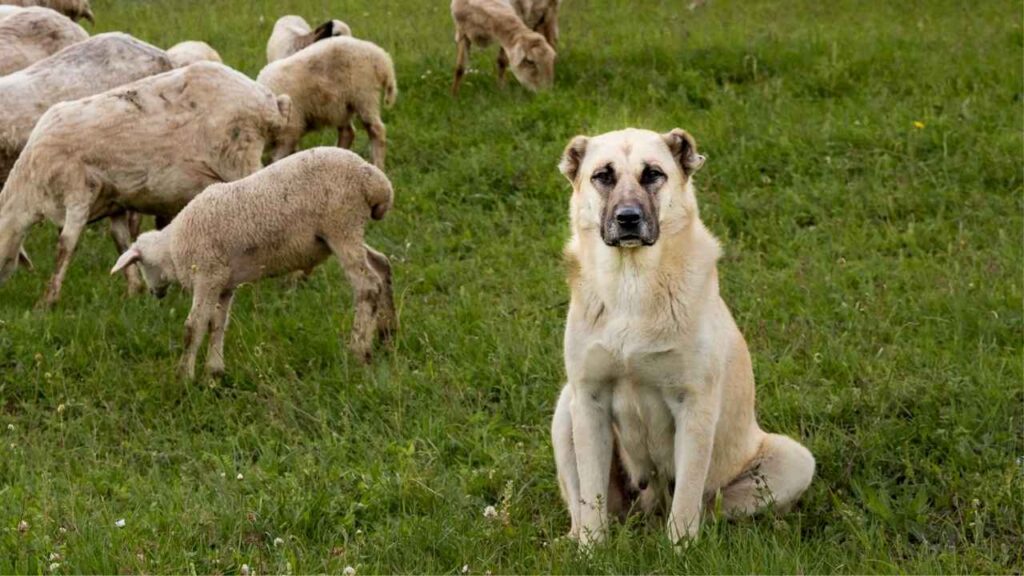
Both breeds have strong protective instincts, but their approach is different. A German Shepherd will go on the offensive if it senses danger, while an Anatolian stands its ground, waiting to see if action is truly necessary. One is a first responder; the other is a seasoned war general.
Petplan mentions that when it comes to family life, German Shepherds are better suited for active families with kids. They bond deeply with their people and are naturally affectionate. Anatolian Shepherds, however, are extremely independent and may not tolerate young children roughhousing with them. They are more reserved, even with their owners.
Neither breed is a great fit for first-time dog owners but for different reasons. The German Shepherd requires intensive training and mental stimulation. The Anatolian Shepherd requires an owner who understands its self-reliant nature and won’t expect blind obedience.
If you want a loyal companion that listens and follows, the German Shepherd is your dog. If you need an independent powerhouse that can protect livestock without supervision, the Anatolian is your best bet.
Trainability and Intelligence Comparison
Let’s get one thing straight: both the German Shepherd and the Anatolian Shepherd are smart, but they use their intelligence differently. One is an obedient genius, the other a strategic rebel.
Britannica claims that German Shepherds are among the most highly trainable dog breeds on the planet. They pick up commands quickly, thrive on structure, and work closely with humans. They’re used in police work, military service, and search-and-rescue because they can follow complex commands with precision. If you’re into competitive obedience or agility, this is your good dog.
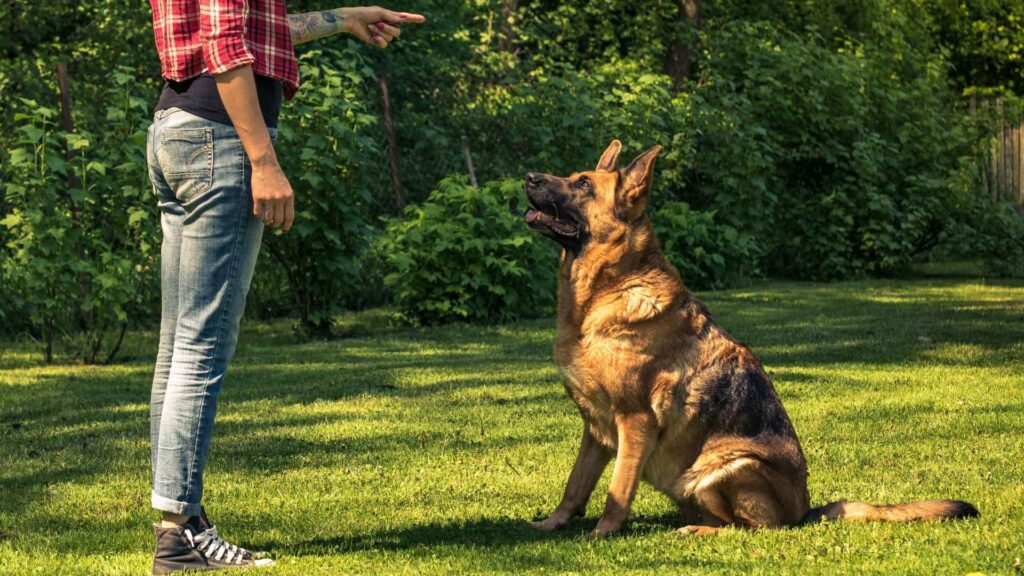
Now, let’s talk about the Anatolian Shepherd dog—the breed that scoffs at obedience drills. VCA reveals that these dogs were bred to be livestock guardians, making their own decisions while fending off predators. They’re smart, no doubt, but they won’t waste time with repetitive tasks. Tell a German Shepherd to sit, and it will do so instantly. Tell an Anatolian, and you might get a blank stare—because it’s busy deciding whether your command is even worth obeying.
This means that training an Anatolian Shepherd requires a firm hand and an experienced owner. Unlike the German Shepherd, which lives to please, the Anatolian needs a reason to comply. They respond better to respect than rewards, so don’t expect them to perform tricks for treats.
Socialization is also a must. While a German Shepherd can adapt to city life and enjoy the dog park, an Anatolian Shepherd sees other animals as either part of its flock or a threat. Without proper training, their protective instincts can turn into aggression toward strangers.
At the end of the day, if you want a dog that listens, learns, and follows your lead, go with the German Shepherd. If you want a dog that can protect livestock and make its calls, the Anatolian Shepherd is the one for you—just don’t expect it to come running when you call.
Adaptability and Independence Comparison
When it comes to adaptability, the German Shepherd vs Anatolian Shepherd debate is night and day. German Shepherd dogs are the ultimate shape-shifters—they thrive in apartments, houses, farms, or even military bases. They love being around humans, and as long as they get enough exercise, they’ll adapt to nearly any environment.
Meanwhile, the Anatolian Shepherd dog was designed to roam vast landscapes, keeping watch over flocks of sheep. These dogs don’t do well in small spaces or heavily populated areas. Throw an Anatolian into a city apartment, and it’ll feel like caging a lion. This breed needs room to roam, a job to do, and preferably some livestock to protect.
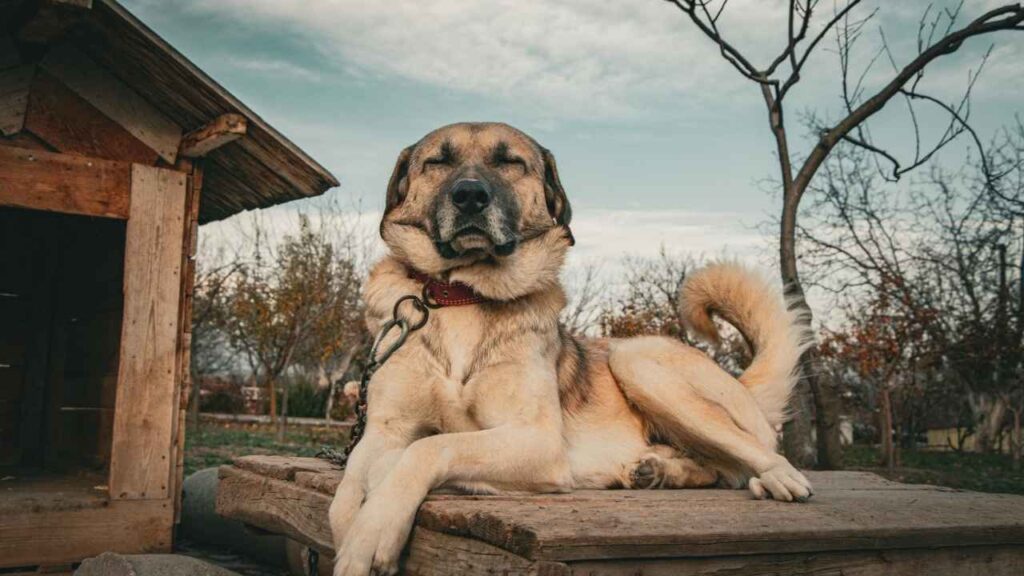
When it comes to independence, the Anatolian Shepherd wins by a landslide. These dogs don’t need (or want) constant attention. They’re self-reliant, making their own decisions about potential threats without waiting for a command. You don’t train an Anatolian—you negotiate with it.
AKC reports that German Shepherds, on the other hand, love working closely with their owners. They need guidance, training, and a strong bond with their people. Their eager-to-please nature makes them fantastic working dogs, but it also means they don’t do well if left alone for too long.
If you want a dog that will follow you everywhere and soak up training, the German Shepherd is your pick. If you prefer a guard dog that doesn’t need constant interaction and can handle itself, the Anatolian Shepherd is the way to go. Just don’t expect it to fetch your slippers.
Bite Characteristics Comparison
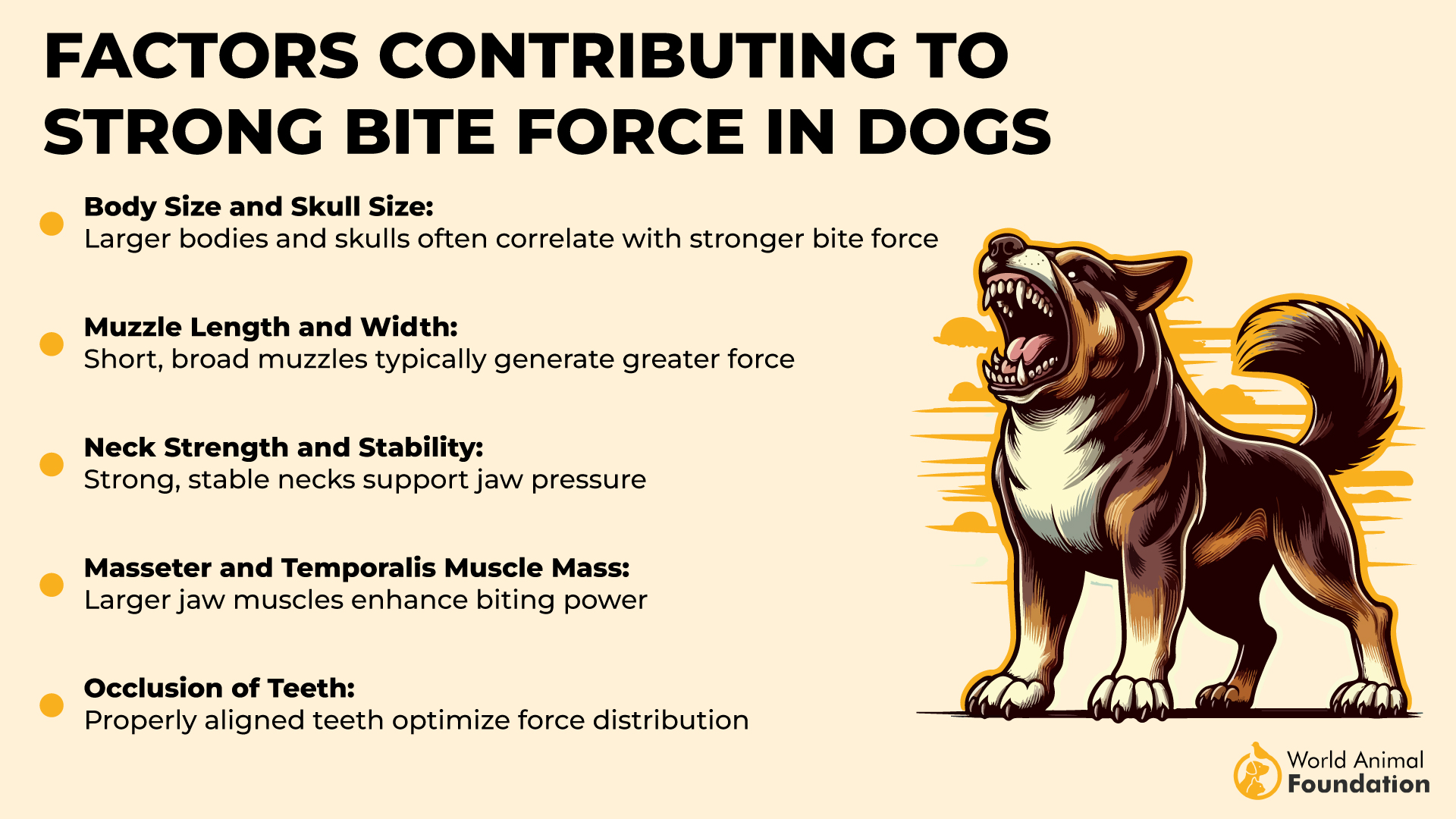
Let’s talk about bite force—because if these dogs decide to use their teeth, you’ll feel it. The German Shepherd has an impressive bite force of around 238 PSI (pounds per square inch). That’s enough power to crush bones, making them an effective guard dog and police K9.
But the Anatolian Shepherd dog? That’s a whole different beast. This livestock guardian packs a monstrous bite force of approximately 700 PSI—almost three times stronger than a German Shepherd. For reference, that’s on par with some predators like lions and bears. If an Anatolian bites down, it’s not letting go.
However, bite force isn’t just about strength—it’s about instinct. German Shepherd dogs are trained for precision. Their bite is powerful but controlled, used in police work to disable rather than destroy. An Anatolian Shepherd, on the other hand, was bred to fight off wolves and predators. When they bite, it’s all about survival.
Another key difference? German Shepherds use their bite strategically, often targeting limbs or other animals with a measured grip. Anatolians go for maximum damage. If they see a threat to their flock, they don’t hesitate—they go all in.
Despite their power, neither breed is naturally aggressive toward humans unless provoked. But if you ever find yourself on the wrong side of an Anatolian Shepherd’s bite, well… good luck.
Health and Lifespan Comparison
When it comes to health and lifespan, the German Shepherd vs Anatolian Shepherd showdown isn’t even close. German Shepherds are incredibly intelligent and versatile, but they’ve been overbred, leading to a laundry list of health problems. The most notorious? Hip dysplasia—a crippling joint condition that can drastically affect their mobility.
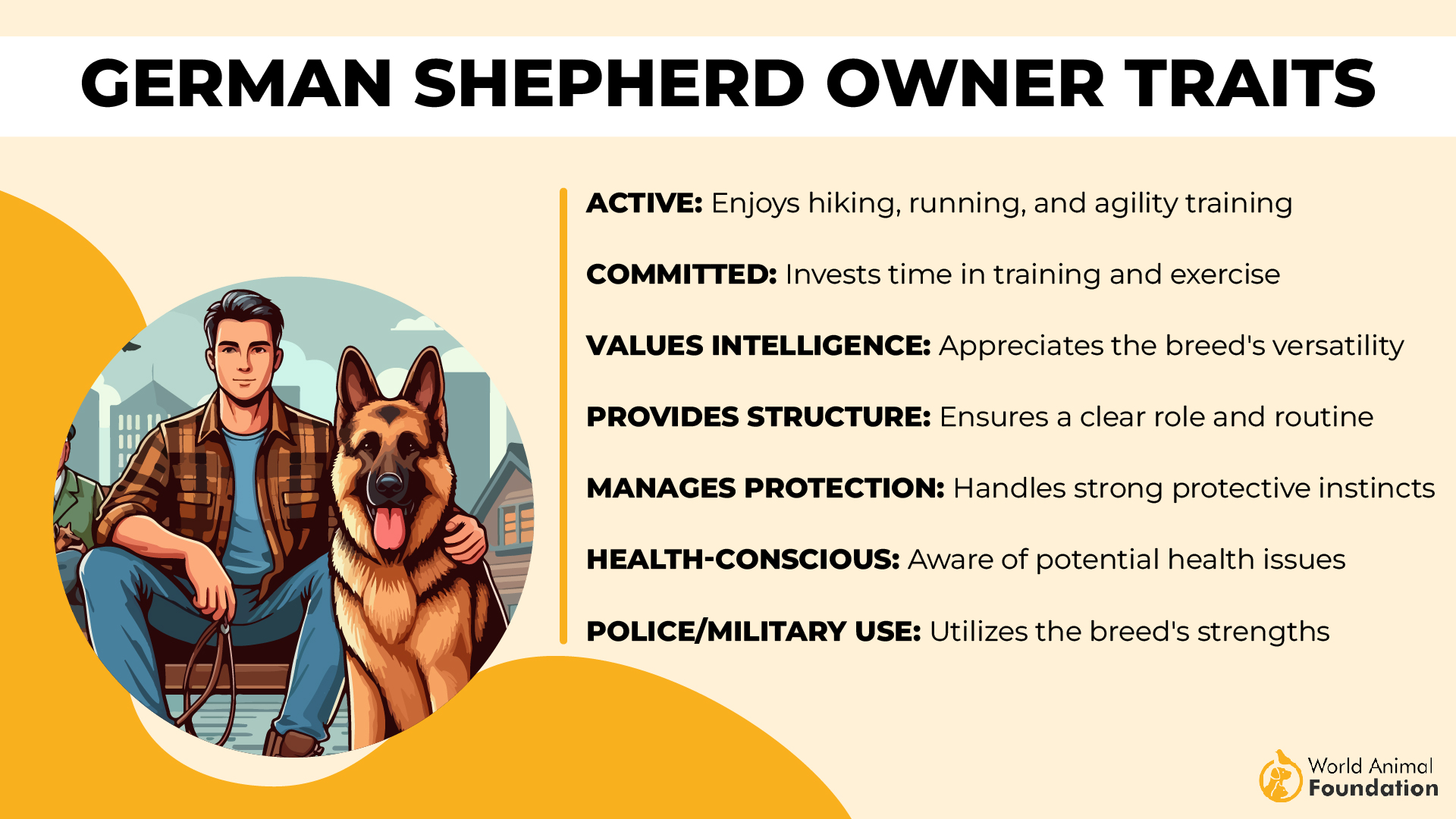
Other common issues in German Shepherd dogs include degenerative myelopathy, bloat, and allergies. Their active nature means they’re prone to injuries, and without proper care, their lifespan averages 9-13 years.
On the other hand, the Anatolian Shepherd dog is a self-reliant tank with fewer genetic issues. They were bred for survival, so they tend to be more resilient than their German Shepherd counterparts. However, they’re not invincible—hip dysplasia and bloat are still concerns, along with hypothyroidism.
According to WebMD, because of their strong genetics, Anatolian Shepherds tend to live longer, averaging 11-15 years. Their protective instincts keep them safe from threats, but their size makes them more prone to joint issues as they age.
Ultimately, if you want a loyal companion with fewer genetic issues, the Anatolian Shepherd is the safer bet. But if you’re willing to manage potential health concerns in exchange for high trainability, the German Shepherd is worth it. Either way, good breeders and proper care are essential.
German Shepherd vs. Anatolian Shepherd: Allergies and Grooming Comparison
Let’s talk about dog hair—because if you don’t like vacuuming, neither of these breeds is for you. German Shepherd dogs are double-coated shedding machines that will fill your house with fur year-round. And during seasonal sheds? Say goodbye to your furniture.
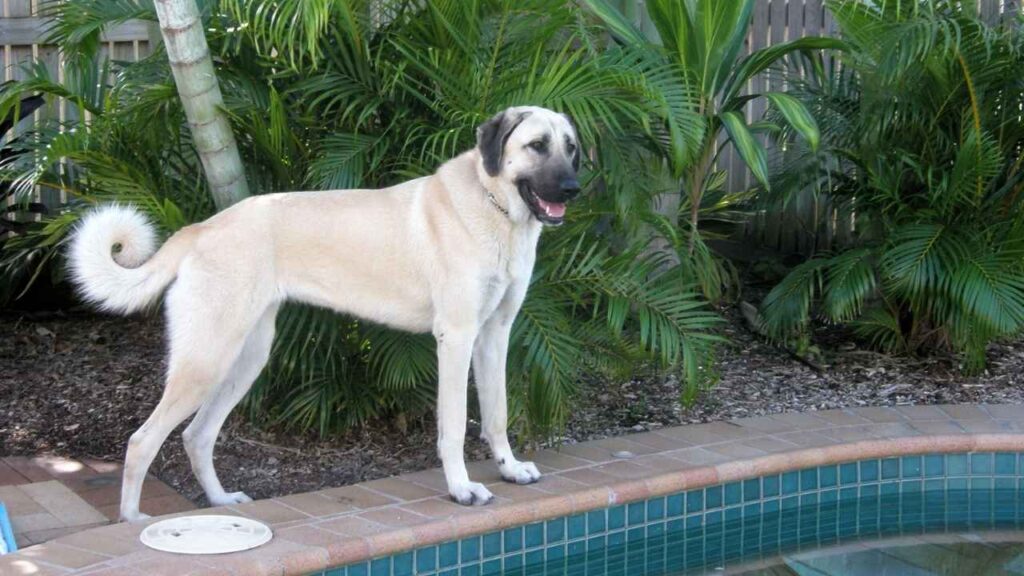
Meanwhile, Purina reveals that Anatolian Shepherds tend to have a thick, weather-resistant coat that protects them from the elements. They don’t shed as much as a German Shepherd, but when they do, it’s still a lot of fur. Regular brushing is essential for both breeds if you don’t want to be drowning in dog hair.
When it comes to allergies, both breeds can be problematic for people sensitive to dander. However, German Shepherds are more prone to developing skin conditions and food allergies, which can lead to constant itching, hair loss, and irritation. A proper diet and high-quality food from a good breeder can help minimize this.
Grooming-wise, German Shepherds require frequent brushing—at least 2-3 times a week and daily during shedding season. Anatolian Shepherds have a lower-maintenance coat but still need regular upkeep, especially during seasonal shedding. Neither breed is hypoallergenic, so if you have allergies, be prepared.
Bathing isn’t a huge concern for either breed. German Shepherds may need a bath every 4-6 weeks, while Anatolian Shepherds—being the rugged livestock guardians they are—only need an occasional rinse unless they roll in something nasty.
At the end of the day, both dogs will fill your home with fur, but a German Shepherd will make sure you never have a clean floor again. If you want less maintenance, the Anatolian is your best bet—but get ready for a lot of brushing either way!
Conclusion: Which Shepherd Reigns Supreme?
So, after comparing every angle of the German Shepherd vs. Anatolian Shepherd battle, which one is right for you? Well, that depends on what you need. If you want a high-energy, crate-trained, super-trainable protector who’ll stick by your side, the German Shepherd is your dog. If you need a self-reliant, no-nonsense guardian who excels at guarding livestock, the Anatolian Shepherd is the last dog standing.
A German Shepherd will greet you at the door, ready to play or work. An Anatolian Shepherd, however, will check the perimeter first—because protecting your home is its top priority. That bark isn’t for fun; it’s a warning.
Do you have older children or a busy household? A German Shepherd pup will blend in like a family. But if you’re looking for a Great Pyrenees-level protector who keeps watch from a distance, the Anatolian Shepherd is unmatched. Just don’t expect them to be a normal dog—they’re in a league of their own.
Both breeds have strong energy levels, but their play styles differ. A German Shepherd will happily chase a ball, while an Anatolian will decide if the ball is even worth its time. Also, if you have cats, be cautious—both breeds have strong prey drives, especially territorial males.
So, which one steals your heart at first sight? Are you team German Shepherd, the ultimate working boy? Or is the Anatolian Shepherd, Turkey’s legendary guardian, the pup for you? Drop your pick in the comments— let’s settle this debate!