WorldAnimalFoundation.org is reader-supported. When you buy through links on our site, we may earn an affiliate commission. Learn More
With pet ownership in the U.S. soaring to 66% of households in 2024, Americans cherish their furry friends for companionship and emotional support, making the U.S. a leading nation in dog ownership. These animals aren’t just pets; they’re cherished family members, offering companionship and emotional support that enriches our lives immeasurably.
However, as we’ve welcomed more dogs into our communities, there’s been a noticeable rise in dog attacks, particularly among adults, whose incident rates have tripled over the last 20 years. This increasing trend touches everyone, from everyday pedestrians to those on the frontline of service delivery.
Facing a potential dog attack can be a terrifying ordeal, filled with uncertainty on how to react safely. While some dogs may lash out without apparent cause, many react out of fear or misunderstanding.
Understanding how to defuse these tense situations not only protects us but also respects the well-being of the animals we love so dearly. This guide aims to arm you with practical tips to safeguard yourself in these encounters, ensuring you know how to respond effectively and safely.
Tips to Protect Yourself Against Dog
Discover essential tips to protect yourself from dog attacks, ensuring your safety with knowledge and empathy.
Keep a Whistle With You
Dogs are often deterred by loud noises, and the sharp sound of a whistle might just halt an attacking dog. Carry a whistle, dogs don’t like its sound. It is a smart precaution against unexpected dog encounters.
It can also serve as a safety tool against potential threats from people, signaling for assistance if you’re in danger.
Create Distractions
If a dog seems threatening, try distracting or confusing it with another object. Offering something like your backpack or water bottle for the dog to chew on can catch its attention, potentially giving you a chance to get away.

If you often come across aggressive dogs, carrying items like loud rattles can scare them off. Dog treats can also distract them by throwing the treats away from you, which might stop an attack.
Bringing treats not only makes you popular among friendly dogs during your outdoor activities but can also be a quick solution to avoid aggression. These distractions can effectively shift a dog’s focus from you.
Carry a Spray Bottle

Pepper spray can be a powerful way to prevent dog bites, giving you time to get help or escape safely. However, it’s crucial to learn how to use it correctly and understand safety measures, as improper use can harm both the dog and you.
Always familiarize yourself with the instructions and safety tips for using pepper spray around animals.
Furthermore, using a taser or stun stick could be effective for self-defense against a dog attack, but it requires the dog to be very close. It’s crucial to familiarize yourself with the local laws on weapons in your area before considering these options for safety.
Avoid Eye Contact

When a dog approaches, the best response is to stay calm and adopt a non-threatening posture:
- Avoid Eye Contact: Look away and stand still with your hands at your sides. Direct eye contact can be seen as a challenge by a scared or aggressive dog.
- Minimize Movement: Remain motionless and make your body rigid to reduce the dog’s interest in you. Sudden movements might signal that you’re ready to engage.
- Position Yourself Sideways: Stand with your side facing the dog, using your peripheral vision to keep an eye on it. This stance shows you’re not a threat.
- Protect Your Hands: Keep your hands in fists to safeguard your fingers. Even if a dog comes close or sniffs you, this position reduces the risk of a bite.
By adopting these strategies, you can signal to the dog that you’re not a threat, potentially preventing an attack.
Utilize Clear and Assertive Commands
If you encounter dogs who look aggressive, loud and clear commands can help divert their attention and prevent bites. It’s crucial to use a firm voice without showing fear.
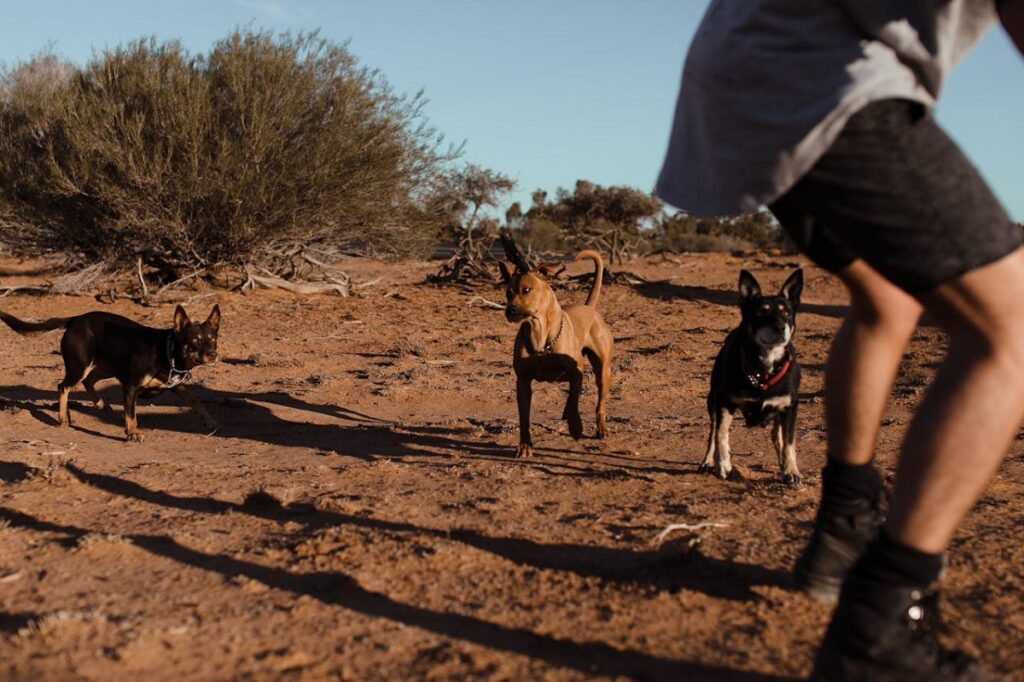
Repeating commands like “Stop,” “Off,” “Down,” “Come,” “Leave it,” “No,” and “Back” can make a difference. These commands, when delivered confidently, may help you manage the situation and keep the stray dog at bay.
Try a Different Route
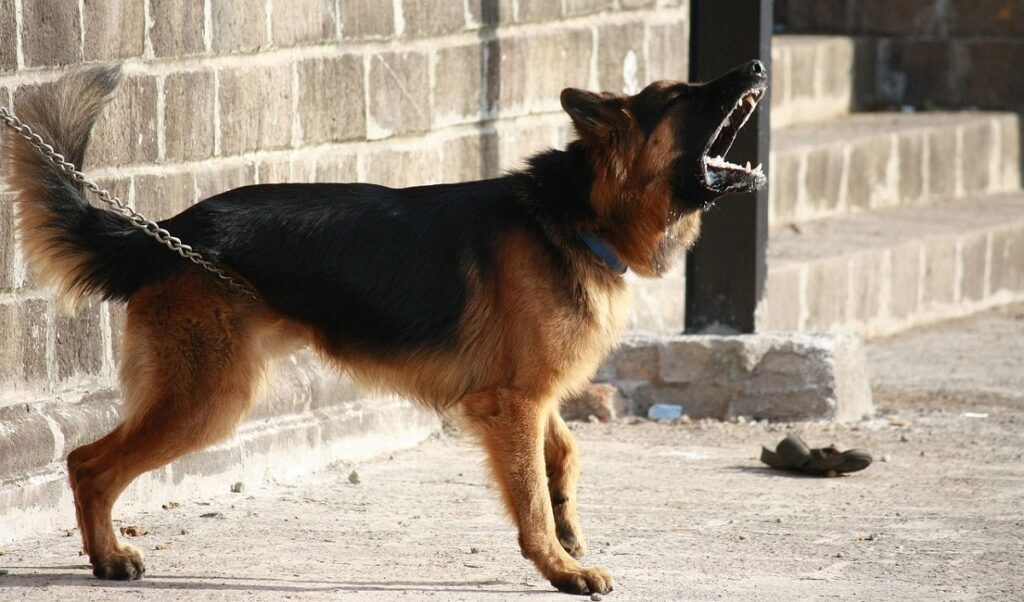
If you’re aware of an aggressive dog along your usual path, consider taking a different route or even just crossing the street to avoid passing directly by the dog’s home. This small change can provide an extra layer of safety. Regularly encountering an aggressive dog increases the likelihood of a risky situation, so minimizing contact is a wise precaution.
Remain Still if Knocked by a Dog
Facing a charging dog can be frightening, but remember, running could worsen things by triggering the dog’s aggression or chase instinct. The safest response is to remain still and avoid sudden movements, which can help de-escalate the situation, allowing you to slowly walk away when possible.
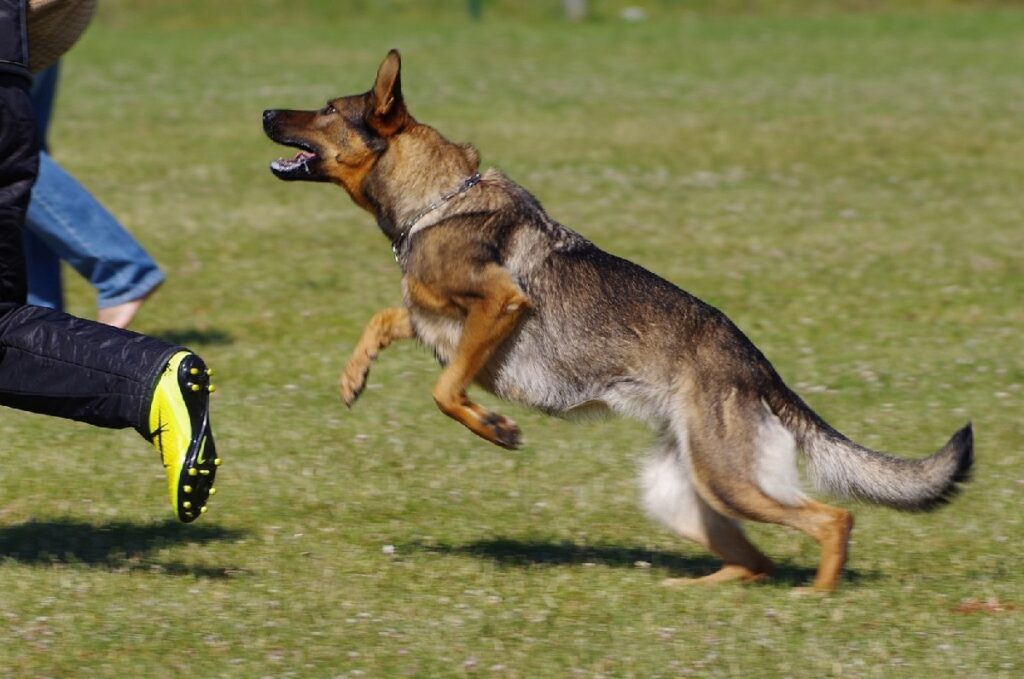
Avoid attempting to run unless you’re sure you can escape safely, as most dogs can easily outrun humans, and even cyclists might find dogs catching up. Staying calm and stationary could prevent an encounter from turning dangerous.
Be Aware of the Signs of an Aggressive Dog
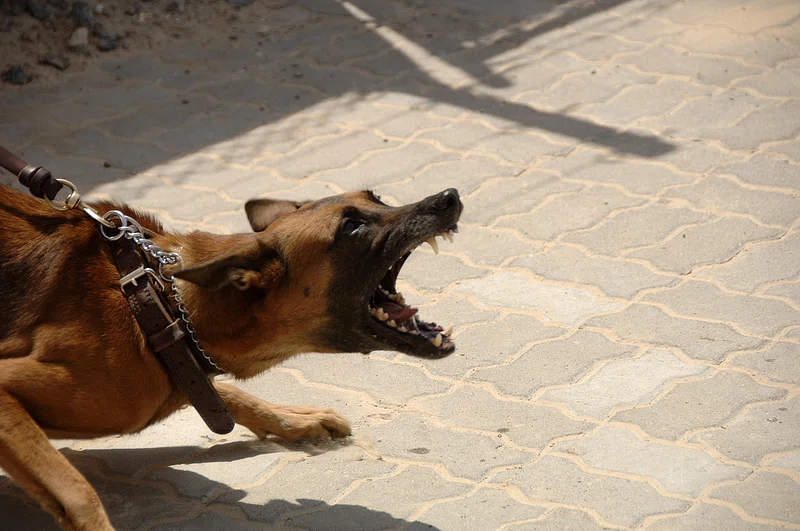
Understanding and recognizing signs of aggression in dogs is crucial to preventing dog attacks. Many incidents occur simply because people fail to identify these warning behaviors.
Here are key indicators of aggression to watch for:
- A Hard, Direct Stare: This intense look can precede an attack.
- Tense Facial Muscles: Stiffness around the mouth and eyes is a sign of discomfort or aggression.
- Growling and Deep Barking: These sounds, especially when guttural, signal a warning from the dog.
- Raised Hackles: Hair standing up along the dog’s back indicates heightened aggression.
- Stiff, High Tail Wagging: A tail that is high and moving stiffly from side to side is different from the relaxed wagging of a happy dog.
By spotting these signs early, you can take steps to avoid escalating the situation and possibly prevent an attack.
Know What Things To Avoid
To minimize the risk of dog attacks, it’s wise to be cautious around unknown and aggressive dogs:
- Treat Unknown Dogs as Potential Threats: If you encounter a dog without any indication that it’s friendly, it’s safest to keep your distance.
- Report Suspicious Dogs: Notify local authorities about any dogs that seem dangerous or appear to be strays in your area.
- Educate Your Children: Teach them never to approach unfamiliar dogs without confirmation that it’s safe to do so.
- Keep a Safe Distance: By staying away from dogs you’re unfamiliar with until you’re sure of their temperament, you can prevent many potentially dangerous situations.
Conclusion
To prevent dog bite attacks, carrying a whistle can deter dogs from approaching, while using firm commands can help manage a dog ready to act out. Understanding when dogs feel threatened and responding calmly can avoid escalating a dangerous situation.
Always treat every unfamiliar animal with caution, prioritizing safety to minimize the risk of dog bites.